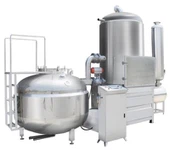
A quick-freezing machine is an industrial device that rapidly lowers the temperature of food to below freezing, causing it to pass through the maximum ice crystal formation zone in a short time, thus preserving food quality. Its working principle is primarily based on heat conduction and convection heat transfer. First, the food is placed on a conveyor belt and enters the low-temperature environment of the quick-freezing machine. Inside the machine, a refrigeration system (usually using ammonia or Freon as a refrigerant) generates cold air. This cold air is forced to circulate by a fan, exchanging heat with the food surface and rapidly removing heat.
The temperature of a quick-freezing machine is typically controlled between -30°C and -120°C, depending on the type of food and the quick-freezing requirements. The quick-freezing time is usually 10-25 minutes, ensuring the core temperature of the food quickly drops below -18°C, effectively inhibiting microbial activity and extending shelf life. Key components of a quick-freezing machine include a refrigeration compressor, evaporator, condenser, fan, and control system. The evaporator absorbs heat from the food, the refrigeration compressor compresses the low-temperature, low-pressure refrigerant gas into a high-temperature, high-pressure gas, and the condenser cools the high-temperature, high-pressure gas into a high-pressure liquid, completing the refrigeration cycle.