
Core Advantages
The advantages of high-temperature frying lines primarily lie in production efficiency, cost control, and consistent product quality.
High Efficiency and Continuous Production: The line design fully automates the entire process from loading, frying, draining, cooling, and discharging, operating 24/7. Its production capacity far exceeds that of batch-type production equipment.
Large-Scale Production and Reduced Labor Costs: The high degree of automation requires only a small number of personnel to monitor the entire production line, significantly reducing labor requirements and the risk of human error.
Consistent and Stable Quality: Precise temperature control and uniform heating ensure that each batch of products is produced under the same processing conditions, resulting in highly consistent color and crispness.
Energy Saving and Environmental Protection:
High Thermal Efficiency:
Oil Filtration System: Internal or external oil filtration systems promptly remove food debris from the oil, extending the oil's lifespan and reducing oil consumption and production costs.
High Adaptability: By adjusting parameters such as conveyor speed and oil temperature, different product types can be flexibly produced, such as chicken nuggets, French fries, fish fillets, and donuts.


Working Principle
The operating principle of a high-temperature frying line can be summarized as follows: Under normal pressure, high-temperature hot oil serves as the heat transfer medium, allowing food to be quickly and evenly fried during transport.
1. Loading:
Pre-processed material is continuously and evenly deposited onto a metal conveyor belt via an elevator, vibrating screen, or a uniform distribution machine.
2. Frying:
The conveyor belt carries the material into a high-temperature oil tank. The tank typically features multiple heating zones, allowing precise temperature control in each zone, enabling complex processes such as "high-temperature shaping followed by low-temperature deep-frying." The hot oil is heated directly or indirectly via electric heating tubes, gas burners, or thermal oil furnaces.
3. Heat Exchange:
The high-temperature oil (usually 160°C-200°C) comes into contact with the low-temperature material, rapidly transferring heat from the surface to the interior. Moisture on the surface of the material rapidly vaporizes, forming a porous, dry, crispy layer (the outer shell), while the interior is simultaneously steamed or deep-fried.
4. Oil Drainage:
After deep-frying, the product leaves the oil tank on the conveyor belt and passes through an inclined oil drain section or a dedicated oil drain conveyor belt. Excess oil flows back into the oil tank by gravity, effectively reducing the product's oil content.
5. Cooling/Seasoning:
After oil drainage, the product enters the cooling area for natural cooling or directly enters the spiral cooling tower. It then enters the seasoning drum for seasoning, such as dusting and spraying.
6. Discharge:
The final product is conveyed to a designated location for packaging.
Main Technical Parameters
Parameters vary significantly between different types and specifications of assembly lines. Below is a table of general parameters for reference:
|
project |
Parameter range/description |
|
How it works |
Under normal pressure, high temperature oil is used as the heat medium, and the materials are continuously transported through the conveyor belt to complete the frying and draining process. |
|
Operating temperature |
Normally 160℃ ~ 200℃, it can be precisely set and adjusted according to product process requirements. |
|
Heating method |
Electric heating, gas heating, thermal oil furnace heating, electromagnetic heating. Gas and thermal oil furnaces are generally suitable for large-scale production and have lower operating costs. |
|
Conveyor belt material |
It is usually a stainless steel mesh belt, which is resistant to high temperatures and not easy to stick. |
|
production capacity |
The capacity ranges from several hundred kilograms to several tons per hour, depending on the width, length and frying time of the equipment. |
|
Frying time |
The speed of the conveyor belt can be precisely adjusted from tens of seconds to several minutes by controlling the conveyor belt speed with a stepless speed regulation motor. |
|
control system |
PLC + touch screen realizes centralized control and recipe storage of parameters such as temperature, speed, time, etc. |
|
Energy consumption |
Depending on the heating method and production capacity, the power of electric heating equipment can range from tens to hundreds of kilowatts. |
|
Key configuration |
Oil filtration system (scraping, circulating filtration), automatic oil replenishment device, oil fume collection system. |
Application Fields
High-temperature frying lines are core equipment for many large food processing companies and are widely used in the following applications:
1. Potato products:
French fries, potato chips, and potato griddles.
01
2. Poultry products:
Chicken nuggets, popcorn chicken, chicken cutlets, chicken wings, and breaded and fried poultry.
02
3. Snacks:
Instant noodles, shrimp crackers, puffed snacks, and donuts.
03
4. Aquatic products:
Fried fish fillets, fish fillets, and breaded shrimp.
04
5. Pre-prepared meals and prepared foods:
Pre-fried spring rolls, meat skewers, pumpkin cakes, and tempura, which can be easily reheated after purchase.
05
Production Gallery
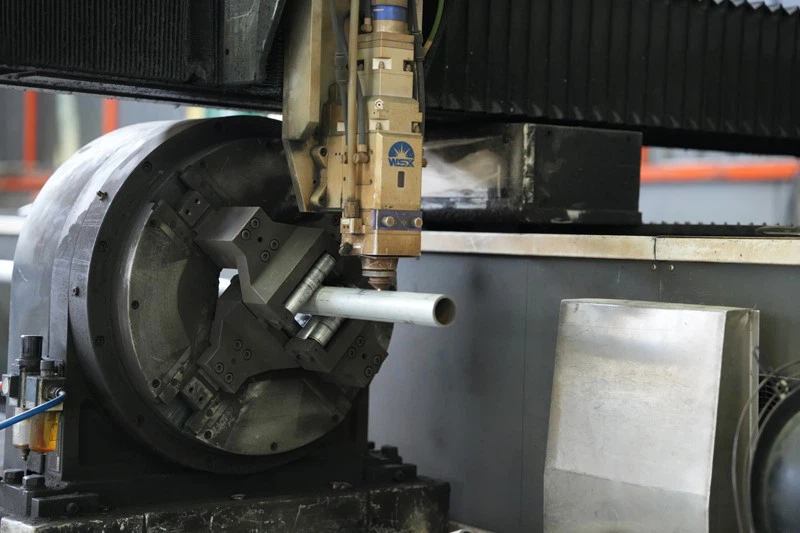


On-site pictures of equipment used by customers


Hot Tags: high-temperature deep-frying machine, China high-temperature deep-frying machine manufacturers, suppliers, factory, vacuum fryer machine, low temperature vacuum frying, Fruit And Vegetable Chips Vacuum Frying Machine, High temperature Deep frying Machine, industrial vacuum fryer, vacuum deep fryer