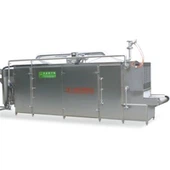
A vegetable slicer mainly consists of a frame, motor, blade holder, transmission components, and feeding cylinder. Its main features include:
Simple structure and easy operation: Vegetable slicers typically feature an intuitive design, allowing users to easily operate them by simply following the instructions. Maintenance is also very simple; regular cleaning and upkeep are sufficient to keep the machine in good condition.
High slicing efficiency: Compared to manual slicing, vegetable slicers significantly improve slicing efficiency, greatly saving kitchen preparation time. This is thanks to their high-speed motor and sharp blades, enabling fast and accurate slicing.
Adjustable slicing specifications: Vegetable slicers usually have an adjustable slicing thickness function, allowing users to adjust the slicing thickness as needed to achieve different slicing results. Furthermore, some models support changing different blades to accommodate the slicing needs of different shapes and types of vegetables.
Wide range of applications: Vegetable slicers are not only suitable for slicing various vegetables but can also be used to slice potatoes, tomatoes, apples, and other fruits and ingredients, achieving multi-purpose functionality. This makes them widely applicable in home kitchens, restaurants, and food processing industries.
Safety and Hygiene: Modern vegetable slicers are designed with user safety in mind, employing a series of safety measures to prevent injury. Furthermore, the machine materials meet food hygiene standards, ensuring food safety during the slicing process.
High Durability: High-quality vegetable slicers typically use premium materials and sophisticated manufacturing processes, resulting in high durability. Under normal use and maintenance, they can operate stably for extended periods.