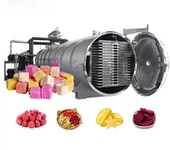
Vacuum freeze‑drying determines the dehydration mode, yet pre‑treatment covers sorting, cleaning, cutting, blanching, enzyme inactivation and quick freezing. Every step will be reflected in the final product. Raw material selection and sorting is the first step. Maturity, freshness and damage degree of raw materials directly decide upper limit of finished‑product quality. Rotten and bruised parts must be removed before processing. Improper cleaning will bring residual impurities, affecting sanitation indexes of end products. Cutting specification also matters greatly. Too thick materials extend drying cycle, lead to uneven dehydration; over‑thin slices are easy to shrink and fragment. For plant‑based raw materials, blanching and enzyme‑killing treatment cannot be ignored. Proper blanching inhibits oxidase activity, effectively preventing browning during freeze‑drying and storage. Without effective enzyme inactivation, products are prone to color darkening and flavor deterioration even after perfect freeze‑drying. The pre‑freezing link belongs to pre‑treatment as well. Unreasonable freezing temperature and freezing speed will form oversized ice crystals, destroying internal tissue structure of materials, resulting in poor brittleness and shrinkage. Many production failures are not caused by freeze‑dryer malfunction. Optimizing pre‑treatment processes can significantly improve product yield and reduce production loss for food manufacturers.
How Raw Material Pre‑treatment Affects Freeze‑Dried Product Quality
Aug 08, 2026
Leave a message
You Might Also Like