Once export‑oriented industrial freeze‑dryers break‑down after arrival at overseas client sites, spare‑part sea‑transport lead‑time is long and on‑site service cost is extremely high, directly bringing production‑line shutdown losses for customers. Stopping potential defects before shipment forms the core principle for export‑equipment quality‑control.
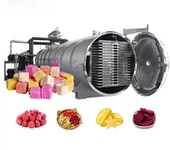
Our manufacturing division completes iteration of full pre‑shipment inspection workflows for export food‑grade freeze‑dryer units. Beyond original component‑level inspection and single‑system power‑on tests, new full‑load long‑duration continuous‑operation simulation tests are implemented. After mechanical assembly is finished, equipment runs under simulated real‑customer‑site production conditions inside our factory. The whole unit operates under load for extended periods to examine long‑term stability of refrigeration system, vacuum system and PLC control system. Temperature fluctuation, vacuum decay and unit start‑stop logic are checked against design specifications.
Complete pre‑shipment inspection covers four major dimensions. First, mechanical‑assembly: verify weld polishing, surface finishing for material‑contact parts, fastener tightening, fit tolerance between trays and racks, with special focus on sanitary‑dead‑corner processing details. Second, refrigeration & vacuum performance: record cold‑trap cooling‑down speed under varied‑load conditions, ultimate vacuum level and pressure‑rise leak‑rate data. Third, electrical‑safety: complete insulation test, overload‑protection check and alarm‑logic verification; multi‑language HMI interfaces are fully validated. Fourth, document cross‑check: confirm completeness of material certificates, test‑reports and export‑compliance files, ensuring delivered documents can be directly adopted for overseas factory‑audit and customs‑clearance.
Every export‑unit generates its exclusive pre‑shipment‑inspection archive with full recorded test‑data. All non‑conformity items must be closed‑loop rectified before anti‑rust treatment and container‑loading procedures are permitted. Strengthening multi‑dimensional testing inside factory reduces failure probability after equipment arrives overseas and mitigates unplanned‑shutdown risks for clients after commissioning.