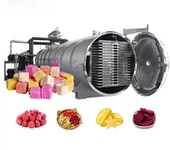
Vacuum freeze-drying technology relies on low-pressure high-vacuum environment to realize direct sublimation of ice crystals inside raw materials without melting into liquid water. Once continuous air leakage exists in the equipment, external air constantly infiltrates into the drying chamber. To maintain the target vacuum value, the vacuum pump needs to keep running under high load for a long time, which directly pushes up power consumption of each batch of products.
More seriously, insufficient vacuum slows down the sublimation rate obviously. The ice inside materials cannot be removed smoothly. Partial melting will occur during production, destroying the original porous tissue structure of freeze-dried products. The finished goods appear shrinkage, collapse, hard surface and poor brittleness, seriously affecting appearance, taste and rehydration performance. In serious cases, the whole batch of raw materials loses commercial value.
Statistically, most vacuum leakage faults originate from the sealing system. Vulnerable parts include drying chamber door silicone sealing strips, pipeline flange gaskets, vacuum valve sealing rings and dynamic sealing components of turnover mechanisms. These rubber polymer materials work alternately under low temperature and normal temperature, accompanied by periodic pressure changes. After long-term operation, they will gradually harden, lose elasticity, crack and deform. In addition, material residues clamped between sealing surfaces will also cause incomplete compression and form air leakage gaps.
Enterprises must establish regular inspection and maintenance specifications. Before each batch of production, operators need to carefully clean the surface of sealing strips and remove pulp, grease and debris. Check whether the rubber strip has cracks, hardening and permanent indentation. Once aging failure is found, replace accessories in time instead of continuing production with hidden troubles.
The static vacuum holding test is the most convenient way to judge leakage. After the chamber is closed and pumped to the set vacuum value, cut off the vacuum unit and record the vacuum rising speed within a fixed time. If the pressure rise exceeds the standard range, it proves obvious leakage exists. Then focus on checking door frame, flange connection surfaces and valve positions.
There are many details to pay attention to in daily operation. Do not use excessive force when closing the chamber door to prevent permanent extrusion deformation of sealing strips. Avoid using strong corrosive cleaning agents to scrub rubber sealing parts. If the equipment needs to be shut down for a long time, keep the chamber door slightly open, so as to prevent the sealing strip from being compressed for a long time and losing elasticity.
Long-term standardized maintenance of sealing system keeps freeze dryers running under efficient working conditions, stabilizes the drying cycle of each batch of materials, controls unit energy consumption within expectation, and continuously reduces production reject rate for freeze-dried food factories.