
As mainstream healthy casual snacks in the global market,fruit and vegetable crisps are favored by consumers for their crispy taste, rich nutrition and portable features. Different from traditional dried fruits made by hot air drying, fruit and vegetable crisps rely on three core forming processes: vacuum low-temperature frying (VF), vacuum freeze-drying (FD), and puffing technology. Each process has independent production logic, equipment parameters and product characteristics. Mastering the differences, applicable scenarios and common production pitfalls of the three processes is the key for processing enterprises to customize products, improve qualification rates and enhance market competitiveness.
Vacuum low-temperature frying is the most widely used mass production process for fruit and vegetable crisps. Different from ordinary high-temperature frying, it operates in a low-pressure vacuum environment with the frying temperature controlled between 80℃ and 120℃. The low-temperature and low-oxygen environment effectively avoids material browning and nutrient loss, and removes excess water from fruits and vegetables through oil bath dehydration. Finished VF crisps feature crisp texture, strong fruit and vegetable flavor and low production cost, suitable for mass production of apples, bananas, mushrooms, okra and other materials. The common production mistakes include uncontrolled vacuum degree, excessive oil content, and incomplete degreasing, which lead to greasy taste and short shelf life of finished products.
Vacuum freeze-drying (FD) is a high-end healthy processing technology for fruit and vegetable crisps. The process principle is to quickly freeze fresh fruits and vegetables at -40℃ to lock the original tissue structure, then complete sublimation and dehydration of internal ice in a vacuum low-temperature environment. The whole process requires no high temperature or oil, retaining more than 95% of the original nutrients, color and shape of raw materials. FD crisps are low in fat, crisp and melt-in-mouth, belonging to high-end zero-addition healthy snacks. The main production difficulties lie in strict control of freezing rate and vacuum dehydration time; improper parameters will cause insufficient material drying, hollow texture or shrinkage and deformation of finished products.
Puffing technology is a characteristic processing method for fruit and vegetable crisps, mainly including differential pressure puffing and microwave puffing. It forms a uniform fluffy and crisp texture through instantaneous pressure difference and temperature change. Puffed fruit and vegetable crisps have low oil content, light taste and strong layering, which makes up for the shortcomings of single taste of fried and freeze-dried products. This process is mostly applicable to root and tuber vegetables such as sweet potatoes, potatoes and taro. Common process errors include uneven puffing, insufficient crispness and easy moisture regidity caused by unreasonable temperature and pressure matching.
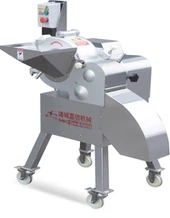
The whole-process standardized pretreatment is the premise of high-quality fruit and vegetable crisp production. Whether adopting frying, freeze-drying or puffing process, raw materials need to go through precise cleaning, peeling and coring, uniform slicing and steaming and curing. Inconsistent slice thickness and incomplete impurity removal will lead to inconsistent stress and water loss of materials in subsequent forming processes, resulting in a large number of defective products. The integrated automatic pretreatment module of fruit and vegetable crisp processing line ensures uniform raw material specifications and stable foundation for subsequent precision processing.
Process adaptation and parameter differentiation are the core of quality control. Professional intelligent production lines support one-click switching of frying, freeze-drying and puffing modes, with built-in exclusive parameter databases for different raw materials and processes. It solves the industry pain point of traditional equipment with single function and mixed process parameters, realizing low-oil, high-crispness and high-yield production of fruit and vegetable crisps. In addition, fully automatic sterile packaging can effectively isolate moisture and impurities, extend the shelf life of crisps and ensure consistent finished product quality.
In conclusion, vacuum frying, freeze-drying and puffing are the three irreplaceable core processes of modern fruit and vegetable crisp processing, covering mass civilian products, high-end healthy products and characteristic fluffy products respectively. Choosing a multi-functional automatic fruit and vegetable crisp processing line that adapts to three major processes can help enterprises flexibly adjust product structures, avoid process errors, reduce production costs, and create differentiated competitive advantages in the healthy snack market.